Sharing Your Goals (Or Not)

English: Derek Sivers, founder of CD Baby and ...

English: Derek Sivers, founder of CD Baby and Muckwork. (Photo credit: Wikipedia)

I am chipping away at my 2012 ‘To Do’ list of Goals and Good Intentions.  Maybe you are too.

Perhaps you are actually speeding through your list, completing your tasks in less than the time you allocated yourself.

If that doesn’t sound like your experience there are several approaches you might take to get more done.

How about doing the grimmest item first (I think the approach is inspired by Brian Tracy’s Eat That Frog principle)?

Alternatively it is tempting to focus on the essential items only.

You might even have thought the easiest motivator is to tell your partner, or best friend that you aim to do X task by Y date.  That pretty much ties your hands.

I’ve found a short TED presentation by Derek Sivers in which he offers his opinion on why that last solution may not actually help.  He also suggests how you might want to tackle more goals, successfully.

http://www.ted.com/talks/derek_sivers_keep_your_goals_to_yourself.html

Good luck whichever route you choose.  Now, which vegetable goes better with an amphibian main course, rice or potatoes?

What does success look like?

Andy Murray

Andy Murray (Photo credit: Carine06)

Even if I had the right skills at 25 years of age I could not have held my own against Roger Federer as Andy Murray did in SW17 yesterday.

Going up against a skilled older professional, in a grand slam tournament, in front of an audience of millions, takes some mental stamina.

Andy didn’t win, but to my mind he also did not fail.  He lost, that’s all.

He was successful in reaching his first Wimbledon final.  My sense is that he will have learned from the experience and will come back stronger next time.

Maybe it is me, but some of the language in the press coverage – Murray was ‘beaten’ and ‘denied’ – seems to put across too negative view of his achievement at Wimbledon this year.

Hopefully his coach Ivan Lendl will celebrate his experience on Centre Court this year.  Playing in the final will take him one step further toward his ultimate goal.  Who would bet against Mr Murray winning an Olympic medal, or the Wimbledon Championship sometime in the future?

Minimalism

English: folded turtleneck

English: folded turtleneck (Photo credit: Wikipedia)

When I started working in an office (late 1989) one of the first bits of training I received was a video presentation of ‘the office of the future’.


You could tell it was meant to be a futuristic vision since the workers were all wearing polo necks, rather than shirt and tie or blouses.  They strode around purposefully and they sat at uncluttered desks, tapping away at computers, efficiently.


The point of the training video was to get me and my colleagues to think about what the streamlined workplace of the 21st century would look like and how productively we would be as workers in that environment.


Naturally a big part of that more efficient, productive future would be that the office was paper free.


I remember thinking at the time, that part of the vision seemed unlikely.  Where would all the paper go?  How brave would you have to be as a manager to say to the Big Boss ‘No, we don’t need to print anything out.  It is all stored on the computer’?


Fast forward two decades and paper is still everywhere.  Even working environments where there is a shared electronic records system, rely on people printing off copies of big reports, or long letters.  However good the screen, it remains difficult to read anything lengthy online, let alone amend it.


The BBC’s technology programme ‘Click’ shows what paperless-ness might look like.  Don’t worry, I think there is still some time before it gets here.  And in case you were wondering there is not a polo neck in sight.


http://news.bbc.co.uk/1/hi/programmes/click_online/9735525.stm

The Best Team Ever?

Vicente del Bosque, Coach of the Spanish natio...

Vicente del Bosque, Coach of the Spanish national football team Español: Vicente del Bosque, seleccionador de la Selección de fútbol de España Português: Vicente del Bosque, treinador da Seleção Espanhola de Futebol. (Photo credit: Wikipedia)

From my experience in work I think one of the keys that helps unlock a team’s talent is an understanding of how individual’s strengths combine when they work together.

Beyond the workplace I think I can see why the Spanish football team are winners in Euro 2012.  Team Spain may have been criticised for being ‘boring’, but they produce reliable, quality results.  It is difficult to argue otherwise with their other achievements including the European Championship and the World Cup.

Now the Euro 2012 trophy is theirs, after a 4-0 triumph over Italy in Kiev, what is one of the secrets of their success?

According to their coach Vicente del Bosque, Spanish footballers “know how to play together”.  Speaking in a post-victory BBC interview he added:

“…I didn’t really want to be the coach who wins but the coach who educates. I want to keep preparing [the team] for the future…”

There are some strong messages for workplace leaders in that clear sporting philosophy:

–       Understand how to get the best out of individuals working together

–       Educate them in key skills

–       Prepare them for the future

I wonder how many bosses will want to dig a little deeper, and perhaps integrate those messages into their leadership strategy?

More details about how the winning Spanish team performed are available on this link.

http://www.bbc.co.uk/sport/0/football/18668878

Three Things I Have Learned In 2012 (So Far)

As the second half of the year has arrived I am in stock taking mood.  In no particular order here are three of the things I know a bit more about now, than I did six months ago:

–        Some providers of goods and services are good at creating an accessible, welcoming feeling for customers new to their brand (yes WordPress, I’m talking about you)

 –       Effective project management techniques can produce good quality, timely results for the non-profit sector, just as they do in the commercial world – www.hoestreetfirst.wordpress.com shows that is the case.

–       It is a challenge to mobilise volunteers for community projects at the best of times.  During a period of austerity it is harder.  Understandably they are focusing on finding / keeping a job; financial security; family time.  Hats off to the folks who do get involved and whose contributions do make a difference.

Some Lessons Are Harder Than Others

From my experience making mistakes seems to be part and parcel of being human.

The 2011 riots in England involved quite a few people making mistakes, getting involved in crime and being punished for their errors.  Usually it doesn’t take a brush with the criminal justice system to make person assess where they are in life, versus where they want to be.  However, with a bit of thought, even serious mistakes can become learning opportunities.

This link to a BBC news story shows that principle in action.

http://www.bbc.co.uk/news/uk-18648920

“Please Select the Option You Require From The Following Menu…”

Congratulations, you have decided to make that change you have been thinking about for ages.  Now what?  There isn’t an automated helpline you can ring up to talk you through the next steps.  So, what sort of options are open to you?

Professor Richard Wiseman – author of the self-help guide “:59 Seconds” – has a few suggestions which may help.  An outline and some comments – of variable quality – about outcomes versus process are available on this web link

http://www.guardian.co.uk/science/2012/jun/30/self-help-positive-thinking

Back to Reality

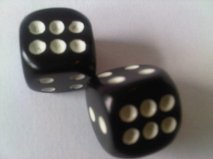
When is the ideal time to learn something new?  Put another way, when is there ever a quiet few months in which to tackle personal development goals?  I doubt there ever will be an ‘ideal’ or ‘quiet’ time, since the stack of competing claims on our time is increasing daily.  It might take a very long time to roll the dice correctly to earn permission to start.

Two dice

Make a choice, don’t leave development to luck


There’s also always the risk that some senior colleagues view that time as time spent being unproductive.

I vividly recall saying as much to a colleague whom I mentored.  His aspiration was to earn a promotion from his entry level management role to the next management grade.

I encouraged him to look at the common attributes called for in the roles he wanted to hold.  I supported him in identifying voluntary opportunities in his current role that he could exploit, to demonstrate his potential.  We came up with a twelve month development timetable he could follow, to gradually build up his skills portfolio.  His goal was to be at the front of the promotion pack one year hence.  Then reality intervened.

Somehow my mentee’s line manager never got around to creating the space for his wider potential to be demonstrated.  Perhaps that manager liked the results he was getting from my mentee and thought my mentee was happy staying in that role.  Inevitably that line manager then left.

Their successor needed to focus on maintaining results, not developing people.

An internal re-organisation followed.

Before the dust settled the ideal time for development had passed.

If there is a lesson to take away from this example, it may be this.  However difficult the reality, the ideal time for development may just be ‘now’.

A bit about Goals (and Motivation)

I was thinking about goals earlier today and the inner qualities we need to hold on to as we support ourselves moving forward.  Not everyone believes that ‘I can reach out for what I want’.  There’s a timely quote from the late Steve Jobs which helps in thinking about this issue:

“Your time is limited, so don’t waste it living someone else’s life. Don’t be trapped by dogma, which is living with the results of other people’s thinking. Don’t let the noise of others’ opinions drown out your own inner voice. And most important, have the courage to follow your heart, and intuition. They somehow already know what you truly want to become. Everything else is secondary.”

(From an Address by Steve Jobs to a Stanford University Commencement Class on June 12 2005).

Obviously having the courage to follow your heart depends on: what stage you have reached in your life; what the people who depend on you think; your basic level of optimism.

Half full, or half empty?

A glass of water filled half way to the top


On top of those points there is the fact that different people see the same situation differently.  One person sees an opportunity, where another sees a threat.  The coach is only going to be able to work successfully with one of these people.

#YourGoals : When Will You Ask For The Things That You Need?

How Are You Feeling About Your 2014 Goals?

How Are You Feeling About Your 2014 Goals?

Do you have too little time to take a break from work? Or are you always too busy to make time for yourself (because you are prioritising someone else’s goals over your own)?

When you look at your answers to those questions, how happy are you with your reality? Are your authentic needs being met, at the same rate as the needs of those people around you?  How do your choices reflect your values; your standards of professional leadership; and your sense of personal fulfilment?

What Can You Do To Achieve An Authentic Balance In Your Life?

If you need to start adjusting your goals concerning that balance, there is a link in the next paragraph to a wonderfully simple TED* talk given by Dr Laura Trice, in February 2008.  Do yourself a favour and invest four minutes during your next break to look at what Laura has to say. I think you will be glad you did.

When Will You Set Yourself A Specific Goal To Ask For What You Actually Need?

Laura’s presentation shows that you can say thank you and ask for what you need By doing so you will motivate those around you to act differently.  You also deepen your authentic connections to others, at work and at home. Try it and see what happens. I’d love to hear how you get on (you can send me a tweet @RogerD_Said ).

There are more ideas relating to your work and life goals in the Archive section here and on Facebook and Google+ too.  Or if you are a Linkedin user you can visit View Roger Dennison’s profile

*In case you are unfamiliar with the acronym TED stands for Technology Entertainment Design.  It is a non-profit organisation devoted to ideas worth spreading.