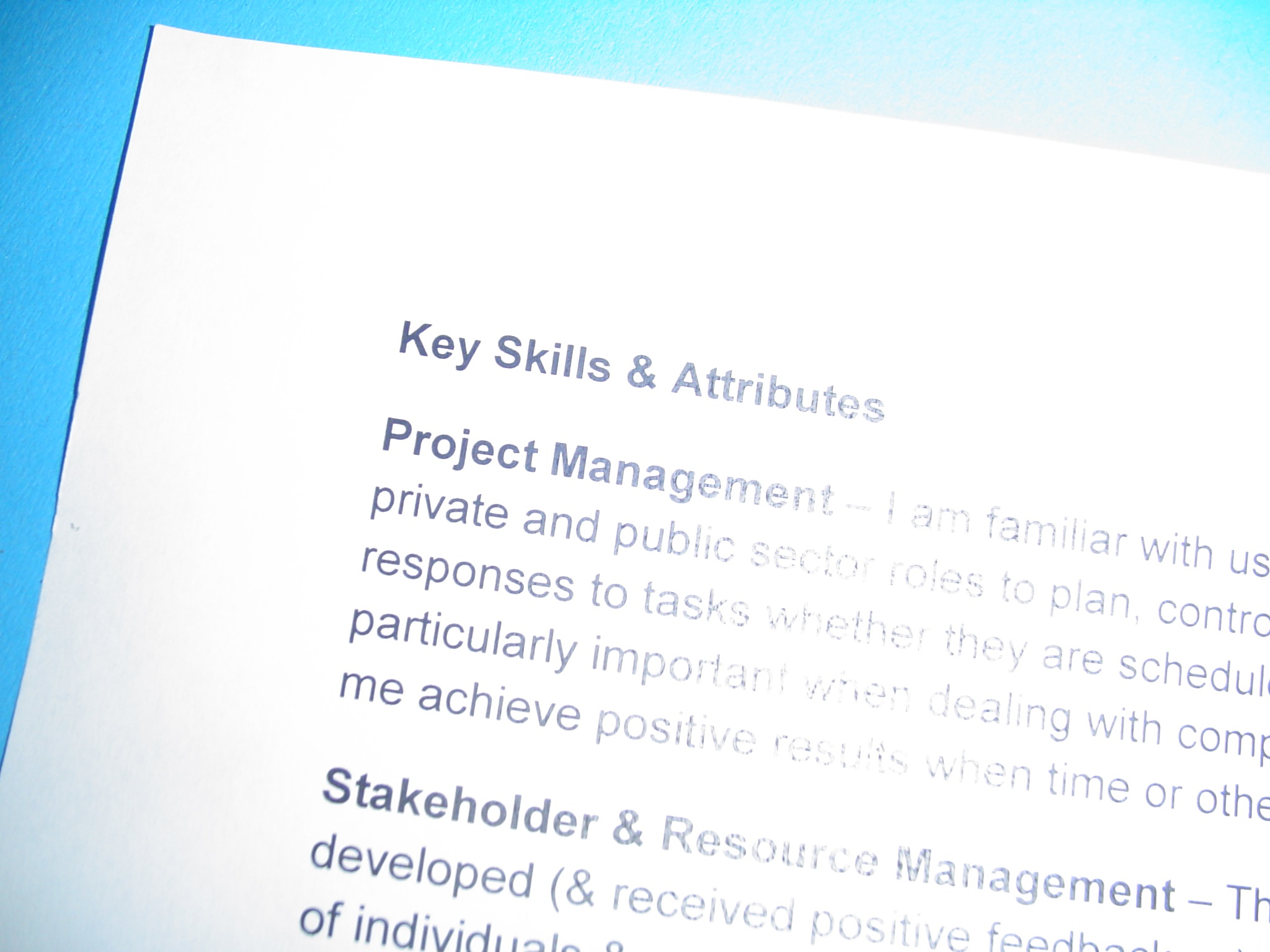
Workplace Goals in 2014

A 2014 Goal Increasing Workplace Skills (c) R Dennison December 2013

A 2014 Goal Increasing Workplace Skills (c) R Dennison December 2013

James Sproule soon takes up post as chief economist and director of policy at the Institute of Directors (IoD).  He has a vision of the UK economy in 2014.

Interviewed on the IoD website by the outgoing chief economist, Graeme Leach, Mr Sproule talks about cautious increases in consumer spending next year.  This new spending will trigger a response from companies that can demonstrate they offer value to consumers.

Companies that can respond in an agile way to digital, tech, or big data innovation will do especially well, Sprouse believes.

If this is even partially true then there will be a premium on staff with computing, coding, or analytical skills in the coming months.  It might also mean enlightened employers will encourage their staff to be flexible in gaining those broad skills, whatever their background.

I was thinking about the issue of confident and skilled staff when I read a call for advice from a demoralised 51 year old in the Guardian newspaper.  He is a strong performer in a hostile working environment.  His health is suffering; he is looking for other work options, and doubting he has skills to offer.  I believe he’ll do fine, once he embraces his opportunities.

I Tweeted my views on the situation as follows (by the way, how are you going to take action on your workplace goal for 2014?)

Contact me – by Friday 20 December – to discuss the coaching support you need to achieve your goals from January 2014.

Wealth: Three Questions For Your Future

Christmas Costs (c) R Dennison December 2013

Christmas Costs (c) R Dennison December 2013

Add up the cost of the presents, the parties, and pushing the boat out and this is an expensive time of the year.

It is not surprising that one person in four is dipping into their savings to pay for the festivities (according to research from the Moneysupermarket website, cited by Rebecca Choules’ in the Daily Telegraph on 7 November).

Hopefully using long-term savings for short-term gain won’t become common place.  If growth in the economy is being led by consumer spending, dipping into the savings pot might disadvantage consumers’ long-term financial security.  It might also make the recovery unsustainable.

Pursuing a wealth goal helps to make the future more certain 

Savings play an important part in prudent financial planning.  Savings have regularly featured in my discussions with coaching clients.  They found that pursuing a wealth goal helped to make their future more certain.

Certainty could also be very important if working life keeps getting longer and the distance until State Pension Age (SPA) keeps getting longer.

The Telegraph’s Andrew Oxlade looked at this issue on 5 December, in a piece entitled “State pension age: The logic that suggests it will rise to 84”.  There’s a link to the piece at the end of this post.

The article quotes a number of experts who speculate about the impact of current demographic changes and the link to possible increases in the SPA by 2050.

3 wealth-related questions this Christmas

All of this speculation suggests we could ask ourselves 3 wealth-related questions this Christmas, to establish some milestones for our own wealth plans:

  • What savings goals will you pursue over the next five years to become more financially secure?
  • What level of financial security do you want to have achieved in the coming decade?
  • How much actions are you prepared to take to achieve further financial security in the next 20 years?

(What answers do you have to those questions?  Why not have that conversation with friends and family over the holiday season, then get some coaching to start making progress in 2014).

http://www.telegraph.co.uk/finance/personalfinance/pensions/10497677/State-pension-age-the-logic-that-suggests-it-will-rise-to-84.html

The Business Show: Part Two – Connections

Here is the follow-up post I promised you, inspired by last week’s Business Show at Olympia (that’s #TBS2013 if you fancy looking at the coverage on Twitter).

TBS2013

Brochure from The Business Show 2013

The event was web heavy, naturally enough, since the internet is such a significant part of business today.  People without tablets, netbooks, smart phones seemed to be in the minority.  Most people seemed to be connecting to the world outside the event.

Felicity McCarthy, Facebook’s Head of Small and Medium Business Marketing Communications made a point which re-enforced the idea of connectivity.

Felicity noted that brands with an online presence are consumed by people who have developed a respectful and loving attitude towards the brand’s products and services.  A brand’s Facebook, or other, online profile helps to build warm relationships.

I was mulling that thought over yesterday, in light of two news stories.  I think the stories capture how the public’s feelings about a corporate and a personal brand can be affected by events.

The corporate story concerns the online banking offer from RBS.  This has, once again, failed to provide the level of seamless service customers expect.  The timing of course could not be worse.  People with Christmas shopping to do really don’t need to have their card transactions refused.

Ross McKewan – RBS Chief Executive – today said “…It will take time but we are investing heavily in IT systems our customers can rely on…”  I wonder how much respect, love, or loyalty the bank will receive from customers in 2014 whilst those IT systems are developed?

On the other end of the scale from the corporate brand there is 19-year-old Olympic medalist Tom Daley .  He has managed a change to his personal brand impressively, according to a piece in the Guardian today* by PR Consultant Mark Borkowski.   The consultant believes that by using his own Youtube channel to affirm his new relationship, and his bisexuality, Mr Daley has demonstrated “strategic control” over his brand.  That is a lesson to other and bigger brands Borkowski reckons.

As everyone – from corporations to individuals – has a story to tell; support to generate; and a reputation to manage perhaps the question is this:

What single step can each of us take to manage our brand better in the connected age?

* Tom Daley Youtube Video

The Business Show 2013: Part One

TBS2013

Brochure from The Business Show 2013

I came across loads of inspiring corporate and one-of-a-kind speakers at the Business Show 2013 in Olympia this week.  This post contains some key thoughts I took from the event.

I will post some corporate ideas later.  Meanwhile here are views from three speakers I think of as ‘one-of-a-kinders’.  They each made an impression on me in a different way.  I hope you too will want to find out more about these folks:

Clippy McKenna – she’s responsible for Clippy’s jam products getting onto Tesco’s shelves.  She demonstrated the importance of being resilient; challenging the status quo; and living in a way that is consistent with your values.  She is on Twitter as @clippysworld

Brad Burton – head of 4Networking – spoke with passion about: knowing your own truth, and allowing that truth to motivate you professionally & personally.  He is also an advocate of respecting your priorities and putting people first.  Find him on Twitter @BradBurton

David Gold – entrepreneur and joint-chairman of West Ham United – emphasised the personal drive required to pursue an inspiring goal.  As he put it, “If it is to be, it is up to me!”  David’s Twitter handle is @davidgold

By the way, if you were to distil your core values into a sentence, what would they be?

A Word To The Wise

Communication

A Thought About Communication (c) R Dennison November 2013

Occasionally it is difficult to get your point across.  You might want to communicate something of yourself, as well as impress with your call to action.

Also there may be certain expectations about how you communicate linked to the working culture in your profession.  In some places of work anything goes, ‘patois’ or ‘banter’ included.  In others, not so much.

I was thinking about all this as there have been several examples of self-expression colliding with effective communication recently.

Exhibit A is X Factor winner James Arthur’s Twitter feud with fellow rapper Mickey Worthless.  On reading the tweets I wondered what Mr Arthur was trying to achieve with his choice of language?  Did he think homophobic language helped establish his street credentials?

Exhibit B belongs to Australian cricketer Michael Clarke.  His sledging comments toward James Anderson were obviously intended to disturb the batsman’s concentration; didn’t they also make Mr Clarke look childish and unprofessional?

Finally, by way of contrast, Tottenham MP David Lammy is right to point out that using a limited vocabulary is not going to help anyone get a job.

Here’s my point.  There’s something to be said for having a communication game plan, before writing, Tweeting, blogging or speaking.  The bare bones of the plan respond to three simple questions:

  • Who is my audience?
  • What sort of language do I want to use to get my point across to them?
  • How do I want to be perceived by them?

No one will get it right all of the time.  However a little fore thought will go a long way to help get the message across.

So here is a question for you: what is the first item in your plan before you start communicating?

International Men’s Day

International Men's Day

19 November is International Men’s Day (c) R Dennison November 2013

I’m usually on the ball when it comes to noting anniversaries and special days.  However the significance of 19 November – International Men’s Day– slipped by me.

After a quick read of the IMD website I can sign up to the goals for the day.  Those goals challenge men to become better role models and promote gender equality.  Where’s the downside?

http://www.internationalmensday.com/

Interestingly I only happened to come across a reference to IMD courtesy of Dr Tim Stanley in the Daily Telegraph.

He has shared a 9 item tongue- in-cheek list of ‘manly, masculine and non-girlie’ ways to commemorate the day.

First item on the list is to start the morning with steak and cigarettes.  I think I see what Dr S is saying about truly ‘manly’ men, as he would describe them.   I suspect they aren’t the sort of fellas who would grow facial hair for Movember.

There are other perspectives on masculinity of course (to be fair, some within the Telegraph itself as the related article below shows).  The Mankind Project in the UK also offers one www.uk.mkp.org

Hopefully, despite the scorn from some quarters, self-aware guys will take a chance, today or soon, to rise to the challenge and grow.  Who knows, some might even be selfless and  pursue long-term goals that make them better men.

Work: Do You Stay Or Do You Go?

A Difficult Decision To Stay Or To Go - (c) R Dennison November 2013

A Difficult Decision To Stay Or To Go – (c) R Dennison November 2013

In my experience unexpected events can highlight the value of keeping an up-to-date life-plan.  In fact the life-planning topic came up recently when I talked to someone whose work situation took an abrupt turn, for the worse, over the summer.

Things changed to such a degree that they needed to decide whether to stay with their organisation or go, within a couple of days.  Having clarity over their work goals – and the operating values guiding them – would have helped reach that life changing decision speedily.

A query in the Guardian Newspaper’s Work blog has echoes of this scenario.  My thoughts – shown as RogerAD – are straightforward.  The decision hangs on whether the correspondent knows they would be more comfortable:

  • Staying in a job with prospects in 2014 – but little rapport with colleagues
  • Returning to a familiar – but small – organisation next year

Employment is such a significant part of life now, this is not an easy decision to contemplate.  Drawing on inner reserves of wisdom will help.  Seeking coaching support and taking the time to think the decision through will help too.

In the same situation what would your answer be?

http://www.theguardian.com/money/work-blog/2013/nov/15/go-back-old-job-career-stagnation

Work In Progress

British Library Business & IP Centre

Good Resources At The British Library (c) R Dennison November 2013

Kudos to the British Library’s Business & IP (Intellectual Property) Centre, for one particular area of work.  They definitely lay on some great business-themed learning and networking opportunities.  Over recent weeks I’ve enjoyed finding out more about:

If one of your goals is to learn more about entrepreneurship the British Library is a good resource to tap into.

Here’s another work related thought, this one courtesy of the Daily Telegraph.  Apparently research from insurance firm LV suggests there are 1.7m home-based sole traders in the UK at present.

Some 11% of those traders – 180,000 – do not have insurance for their business activity.  They may believe that their domestic policies protect them, when in fact they do not.

It sounds like there is a need to signpost some top ten ‘how to’ materials to new entrepreneurs.  In that way the 11% figure may gradually come down and fewer start-ups will miss out on a basic element that helps their businesses get going.


Remembrance

A Chance to Remember (c) R Dennison November 2013

A Chance to Remember (c) R Dennison November 2013

I worked alongside a couple of ex military people during my time in the civil service.

I think I understood their approach to getting their office jobs done.  It was a combination of pride and dedication that they brought to work.

With Remembrance Sunday behind us now I know I won’t be alone in taking two minutes out of my day at 11am tomorrow.

That will be my time to think about the professionalism of the military and the sacrifices they make for the rest of society.  On the eleventh day of the eleventh month it is the least I can do, to say ‘thank you’.

Stock Take Part Three: Wealth

What is important about your wealth  goal? (c) R Dennison November 2013

What is important about your wealth goal? (c) R Dennison November 2013

Part one of the stock take series of posts touched on work.  Part two concerned well-being.  Inevitably part three draws those strands together somewhat by addressing wealth.

According to a recent ‘Better Life Index’ report for the Organisation for Economic Co-operation and Development (link to the OECD’s research is below), increasing the amount of money we possess is an important means to achieving higher living standards and greater well-being.

That may be a particularly important notion for the bottom 20% of the UK population whose annual disposable income, the OECD says, is the net equivalent of approximately £5700.

There is quite a disparity between the bottom 20% and the top 20% equivalent (net annual income of approximately £27,800).  That gap may also underpin the current party political and media conversation around the: ethics of payday loan organisations; senior executive salaries; growth of low-cost retailers’ profits.

Wealth related goals can touch many primal emotions depending on the individual’s upbringing.  Some people are encouraged to view money not as a neutral store of value – but as a commodity about which to feel shame, guilt, or fear.

Once the client’s orientation towards wealth is established the coaching proper can start.

The coaching questions that spring to my mind around managing wealth seem particularly relevant to those on the lower end of the income scale:

–       What is the most important aspect of your wealth-related goal?

–       What progress do you want to have made toward that goal in 12 months’ time?

–       How will you know you are making progress in 6 months’ time?

–       What else could you do to attain your goal?

These are just a handful of the questions which might generate illuminating answers.  I believe if the client can get some specifics down on paper they are increasing their likelihood of success.  Tackling their goals, especially their wealth goal, can definitely make their life seem brighter.

http://www.oecdbetterlifeindex.org/countries/united-kingdom/