3 Benefits You Get From Inspiring And Motivating #Content

Progress Involves Setting Goals Taking Action And Achieving Great Results

Progress Involves Setting Goals Taking Action And Achieving Great Results

It was great to start a conversation about goals, actions and achievements at a workshop last week.

Speaking with a roomful of people – on 28 January – about how to #SetGoalsAndTakeAction caused me to think about the benefits you get from pursuing your dreams.

If you are in the right frame of mind to change your life you can have a brilliant year. Positive thinking will open your mind to the key messages from inspiring live speakers, or writers appearing across social media.

If you are on the lookout for inspiring, motivating and action-oriented content you might want to search out material offering these outcomes:

Effective Content Offers These 3 Outcomes

  • It Solves Your Specific Problem – How does the story being told connect directly to your situation? People like to learn how to resolve their situation by following the example of someone who has been there already. How can you apply the lessons on offer?


  • It Suggests An Alternative View – Does the material give evidence that challenges your views? It might be worth considering what is being said, since it could influence you to take a fresh look at a familiar topic. Your creativity may be triggered, highlighting a new way forward.


  • It Stirs You To Take Action – Does the speech get you fired up so that you want to move forward beyond your limiting beliefs? If it is persuasive you might feel compelled to take a beneficial action straightaway.

What Can You Do To Promote Useful Content?

If you see a presentation or a post which combines those 3 elements you will probably want to add your comment, or share your experience with other people in your network, so they can benefit from it too.

Your commentary or authentic word of mouth recommendation is very valuable and can make an idea get the attention it deserves.

In other words your Facebook ‘Like’ or Twitter ReTweet can spread the word far and wide.

What Is Your Next Step?

Thank you for reading this post. Would you like to help continue this conversation?

What is the most effective content you have encountered recently? What made it work so well for you? Say a few words in the Comment section below or Tweet @RogerD_Said

If you found this post useful feel free to share it with others. I’m on YouTube so you can suggest topics for me to comment on http://bit.ly/Experience_Your_Life_Intro  Either way keep an eye out for future posts that help you achieve a more successful 2015.

3 Ways You Can Do More Than You Thought Possible By Setting Goals And Taking Action


Where Will Your Next Step Take You? - Photo Credit smswigart via Morguefile.com

Where Will Your Next Step Take You? – Photo Credit smswigart via Morguefile.com

If you read billboards, or advertising on public transport, you will already know this is your year to:

  • Meet someone amazing
  • Achieve your ambition
  • See the difference you make

No pressure then if your work or life goals are smaller in scale. How often does the big vision you have of a personal project stay in your head? Taking the first steps towards turning your mental vision into the real-world outcome you want can be hard.

If your vision is a bit more modest you could take inspiration from the historic achievement of Tommy Caldwell and Kevin Jorgeson who scaled El Capitan this week. They have been working toward that outcome for years. Naturally they believe Teamwork and Persistence pay off in the end.

Here’s a link http://bit.ly/Inspiratonal_El_Capitan to the BBC coverage of the story. For me this is Kevin’s killer quote

He said the experience of scaling a peak by a route no one had taken before

“recalibrates your perception of what you can do and what’s possible”

3 Ways People Can Do More Than They Thought Possible

In the real world people get by with what they can achieve. With a little inspiration they can achieve more.

Understand the nature of the person whose problem you are trying to solve – I was on the receiving end of an email a while ago from someone with whom I was collaborating on a project.

Their email was a bit of a rant over several topics on the edge of our project. Luckily I read and remembered something from Dale Carnegie’s classic book How To Win Friends And Influence People.

Carnegie quotes what the founder of the car making company Henry Ford said about understanding others:

“If there is any one secret of success it lies in the ability to ‘get’ the other person’s point of view and see things from that person’s angle as well as from your own.”

With that thought as my inspiration I made time to make a phone call. I really listened to what my friend was saying. I understood that the rant was actually about fears that their voice was generally going unheard.

A phone call and some deep listening took the heat out of the situation. By understanding what was underneath the rant I was able to move the relationship forward. Good news for the project too, since there were no serious disagreements festering under the surface.

Practice to improve your skills – most people don’t have special powers. Initially we make do with our natural abilities. Then we grow. There are ways to work with what you have got to improve.

The late Arthur Ashe is someone I quote often. He was action oriented. The quote I will use in a goal-setting workshop later in January goes like this:

“Start where you are. Use what you have. Do what you can”.

When was the last time everything was 100% perfect in your life? All of the elements are not perfect in the project I just mentioned. But they can be made to work together with some effort. Is waiting for the perfect moment keeping you from achieving more success?

Collaborate with others who can help you improve your performance

Henry Ford also believed that

“The accumulation of great fortunes calls for POWER and POWER is acquired through highly organised and intelligently directed specialist knowledge. But that knowledge does not necessarily have to be in the possession of the man who accumulates the fortune”.

In other words, you can spend time trying to be a specialist in several areas. Or you can offer your skills to a group of people who have other skills you can draw on. Who will you work with this week?

What Will You Do This Week To Redefine The Word ‘Possible’?

Hopefully you are inspired to start making a difference in your own life. The Pareto Principle suggests 80% of your results can come from just 20% of your efforts. It is surprising where small initial steps, in line with your values, can take you. What ‘impossible’ outcome will you achieve this month?

As I mentioned above, I will discuss these ideas with people coming to my goal setting workshop on 28 January – details here http://bit.ly/Set_Goals_Take_Action – so expect to hear more about the benefits of taking action over the coming weeks.

Meanwhile I would love to hear about what you are going to accomplish in 2015. Share your plans here in the comment section, on Twitter @RogerD_Said or have your say on LinkedIn if you would prefer.

Top 5 Tips If Your #Goal Is Job Hunting In Your 40s And 50s

Setting And Reviewing Goals Does Not Take Long

Taking Action To Set And Review Your Goal Does Not Take Long

How is January working out for you? Is your goal a New Job to go with the New Year? You are in good company as many people make a fresh start in the Winter.

What are the key elements in the strategy you have chosen? Will you be:

  • Letting people in your network know you are in the market for a new role?
  • Making time to research the types of organisations you would like to work for?
  • Reviewing which of your skills need to be refreshed?

All of these elements could form part of a positive strategy. For women and men with 20 to 30 years’ experience in the workplace a few extra elements might be useful too.

Older Wiser More Experienced

If you have spent a generation at work you will be in your 40s or 50s. Was your focus achieving results and raising your family? If so you are older, wiser and more experienced.

You are now competing with people in their 20s and 30s. That means you may need extra support to find a workable strategy. Should that be the case, help is at hand.

Your Top 5 Tips

The Guardian newspaper recently asked experts to answer questions from readers about searching for jobs. Here is the link http://bit.ly/Job_You_Love to that conversation. There is some good thinking on offer and the whole discussion is worth a read. If you just want some pointers please see the bullets below.

I asked their panel of experts for advice specific to people in their 40s and 50s. Here are 5 Tips from their comments (what would you add to the list?):

  • “Someone in their 40’s and 50’s can bring a wealth of experience – the important thing is to make sure that your CV highlights that which is most recent and relevant to the job you are applying for. You can summarise earlier experience in a few lines or a short paragraph and give the space to bullet pointed achievements where you have added value to your organisation”.


  • “Make sure you show technology savvy, your success in working as a team member, and that the language used in your CV is current”.


  • “Don’t use job descriptions on your work experience, use bulleted lists. This will help your experience stand out”.


  • “The last 10 years in detail is probably sufficient, with an “Earlier Career History” section (without dates) for the earlier stuff”.


  • “Make sure you are present at the key social networks for job search, i.e. LinkedIn, Twitter with updated professional profile”.


How Will You Make Use Of This Information?

I hope this information adds value to your search for work that you love.

Feel free to share this information with others who would find it helpful. You can comment here – on Twitter @rogerd_said – on Facebook or continue the conversation on LinkedIn.

#GEW – What’s Your Secret To Confident Public Speaking?

Speakers At The 2014 Work & Family Show

What Is Your Secret To Public Speaking?

Are you getting connected with the no-cost and low-cost events in the UK during Global Entrepreneurship Week ?

Hopefully your goal is to sample some of the Networking Sessions; Webinars and Presentations scheduled from now until 23 November. You will definitely be able to hear some inspiring ideas from some talented speakers in the next few days.

Any one of those learning opportunities might be the right one to give you clarity. They will help you see past the fog of options that you might pursue and focus on your next development goal.

What’s The Secret To Confident Public Speaking?

Have you ever wondered how some speakers seem to effortlessly get their points across?

Whether you are in the UK, US, the EU, or further afield I think the speakers you listen to will have 3 points in mind as they clear their throats and start speaking. They will be mindful of the need to:

  • Focus on meeting the information needs of you, the audience member
  • Present their message in a simple and straight forward way
  • Give you a summary and a call to action before they finish speaking

How Do These 3 Strategies Help Speakers Get Their Message Across?

  • Addressing the audience on their terms means the content is relevant and accessible, rather than too academic
  • Simplicity means you are more likely to remember the key message or stat the speaker referenced
  • Summarising the content underlines its importance and signals that there is more information on the key topic than the presentation could contain

These 3 strategies also naturally lead you and the rest of the audience to read an article online, subscribe to a Newsletter, or book onto a follow-up session if that is the final point the speaker mentions.

How Will You Share The Information You Gain During #GEW ?

Feel free to comment below – or on Twitter @RogerD_Said – on the learning you have undertaken and how you will apply inside or outside work. I’ll be sharing my GEW takeaways here and across social media during the week. Why not join the conversation?


Goals 2014: How To Be #Mindful And Confident Before Tackling A Change #Goal

Tai Chi Exercise

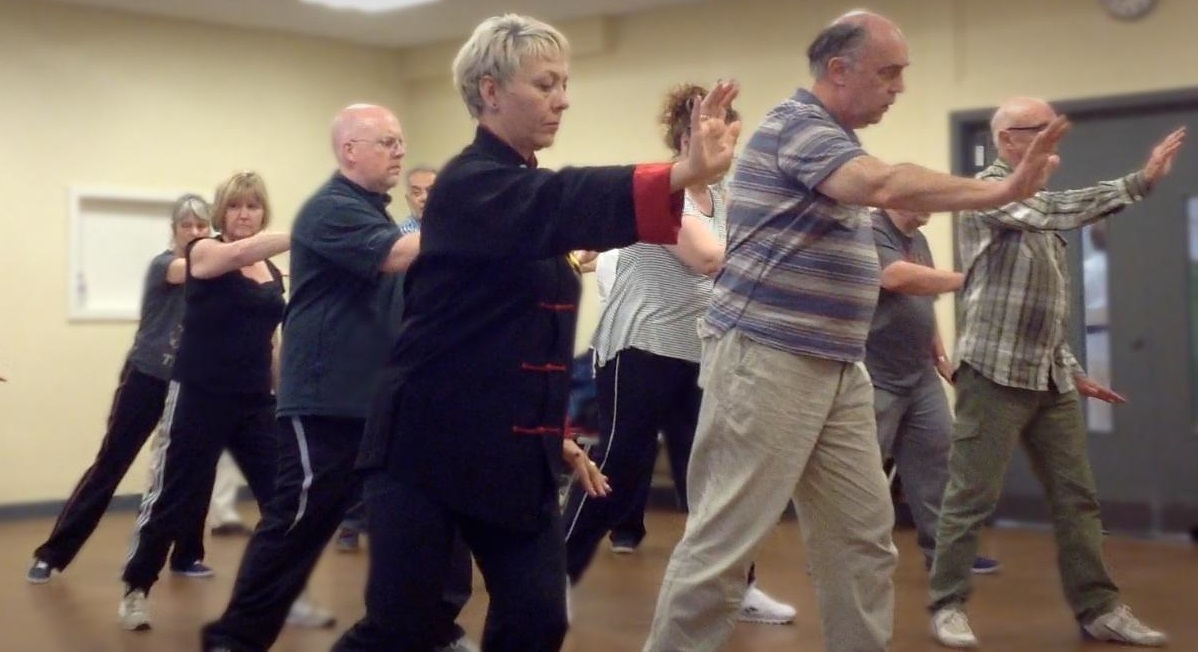
What New Challenge Will You Take This Week? Picture credit The Tai Chi Club on Morguefile

I’ve recently been posting on LinkedIn and elsewhere about the feel-good benefits of taking action. Action can mean getting an enterprise of the ground, or encouraging others to make effective use of your time

If you follow the links you will see the context for those posts is making the most of yourself in the world of work. However, in the real world work and life co-exist. Making any kind of change in one part of your life opens up the possibility of a positive outcome in the other.

Starting an exciting new work project adds spice to your social life. Getting people to respect your time at work increases your confidence generally. Having a reserve of confidence to draw on helps you prepare, step forward and change.

How Do You Know That You Are Ready To Change?

Being mindful about your inner state and your readiness to change something significant in your life involves knowing what is in both your head and your heart. Procrastinating about change goals is understandable Taking action on a change goal involves accepting the discomfort you will experience.

Starting a social or commercial enterprise involves making connections; sharing your ideas; overcoming problems; being resilient. It is not a head-based issue. Your heart is involved too. The big question is: How does the idea of changing your situation make you feel? What small, but important, step can you take to increase your confidence levels?

What’s Confidence Got To Do With It?

Like I said you need a reserve of confidence to call on to help you picture your success. You won’t take the first step and plan – let alone undertake – effective action without it. Some people are too low on reserves of confidence to make the first step. Their life goals are low priority items. Their goals lie low on the list, behind the day to day pressures of an agenda topped by paying the bills.

If those pressures persist for long enough they can contribute to health problems. Those problems can escalate to an extent that they become mental health issues (according to the Mental Health Foundation 1 in 4 of us will have a problem like this in the course of the year)

Tackling Mental Health

Great then to see that Sport England is directing £2m ($3.2m or 2.5m Euros) into improving the lives of people with mental health problems.

Their project director (a former boss of mine) Mike Diaper says:

There is compelling evidence that participation in sport and physical activity has a positive influence on mental wellbeing and mental illness. This includes enhancing day-to-day moods, reducing the impact of stress and enhancing self-esteem”.

Obviously there is a long way between under-confidence and serious health conditions like anxiety. I’m just glad some work is being done on these debilitating issues.

How Do You Ensure You Are Taking Good Care of Your Health?

What’s your secret for remaining healthy under the pressure of your personal and working life? If you are preparing to make a major change in your life how do you build up your energy reserves?

  • Is it by ensuring you eat healthily and sleep well?
  • Do you make time for your weekly mind and body work out of Tai Chi?
  • Is your main priority relaxing with your family over the weekend?

Share Your Secrets To Getting Stuff Done

In the pressured world in which we live it is good to know how people maintain their day to day balance. If you are ok sharing your story please add a comment below. You can continue the conversation on Twitter @RogerD_Said too.

Goals 2014: How Will You Keep Developing Your #Leadership Skills Next Week?

What Connections Do Leaders And Managers Inspire?

What Connections Do Leaders And Managers Inspire?

Are you content to leave tackling your leadership goals until the New Year? Or are you ready to spend 5 minutes today planning your next step towards self-development?

What Happens When Leaders Build On Their Strengths?

If you are motivated to take action to achieve improvement here are some interesting trends from a US study of leaders’ self-improvement results:

  • Leaders can measure their performance gains, when they take action on the goal of developing their strengths.


  • More than 70% of those leaders who focused on building strengths felt they had improved their overall effectiveness


  • Nearly 60% of those strength builders feeling their improvement positively impacted their organisation

The article from which I’ve taken these data was written by Behavioural Statistician Joseph Folkman and is published online by Forbes magazine.

What More Could Leaders Do?

I think it would also be valuable to see how the people who directly report to those leaders view the ‘After’ picture. Also other stakeholders might have valuable views on what the leader’s post-improvement results look like. Do those groups feel more connected to their leadership figure after they have developed, compared to before the change occurred?

The biggest ask would involve leaders applying themselves consistently to the areas in which they are not strong. After all, it is relatively straightforward to take action to build on your strengths. Taking these actions involves going with the flow and doing the things that feel nice and rewarding.

How Challenging Is It To Go Against The Flow?

The real challenge – which involves working against the flow – means acting on goals which involve deep, authentic, growth work. These are the areas where resistance is strongest. These areas touch deep seated fears and are the ones where the knot in the gut usually gets in the way.

That hard work pays off, over time. There are real rewards in overcoming that resistance. Rewards for self, colleagues, and clients. There is a sweetness to those development gains too.

What Does A Mix Of Goals Look Like?

It is a challenge to go full on after hard to reach self-development gains. I remember one of my coaching clients felt much better tackling a mix of goals when she decided where she wanted to be in 12 months, then:

  • Focused on developing her empathic skills (to serve her colleagues and clients better meantimes)

and

  • Prioritised being more assertive (so that she could have a more effective working relationship with her supervisor during her personal development phase).

She was understandably pleased with the results she achieved, over time, by combining straightforward and hard to reach goals.

Which Strength Building and Challenge Goals Will You Act On?

Please use the Comment section here to share your stories of pursuing your goals. Let your colleagues and friends know that goal setting isn’t time consuming and that effective support makes the difference, whether you are in the US, UK, EU or further afield.  Your success will inspire plenty of people who need a nudge to get going.

(Tweet me @RogerD_Said and I will continue the conversation there too).

Goals 2014: 3 Ideas To Help You Stand Out In Your #JobSearch

It is that time of year.  Your goals set last January have been accomplished.  Your summer break is a fading memory and you are back into the familiar rhythm of the working week.  Hopefully you are ready to take decisive action, rather than staring out of the window at the leaves changing colour.

Your Top 3 Job Search Suggestions

If you are looking to change of your job role, or place of work you might find you need to polish up your CV / Resume and covering letter.  The information in the Tweeted link helps you do just that.

Basically the Guardian’s Job Goddess suggests that jobseekers should remember to:

  • Start their letter by talking about the fit between their experience, their skills and the role for which they are applying
  • Specify how much impact they have had in similar roles (How many customers did they have? How much revenue did they generate?)
  • Demonstrate their continuous learning strategy by mentioning what recent qualifications or experience they have gained.

Who Will You Share These Suggestions With?

If this isn’t the right time for you to be moving on who do you know who would benefit from this information?  How will you share it with them?  When are you going to do it?  I’m sure they will be grateful that you passed these ideas on.

Tweet your feedback to me @RogerD_Said or use the Comment section here.   I would love to know how these ideas help in practice.

Goals 2014: 3 Questions To Help You Find Your #Purpose Or #Calling This Autumn

Coffee Psychology Graphic

Image From Filtered Magazine: You Can Find Your Calling And Purpose During Your Coffee Break

When was the last time you sat down with friends and talked deeply about the connection between the life you are leading professionally and personally, and your self-fulfilment goals?

If it has been a while it might be a good time to review things.  As the days are shortening, and Autumn is approaching, here are some thoughts to help you consider your purpose and calling (perhaps during your coffee break).

Where Do You Get Your Inspiration?

It definitely helps to have fresh inspiration on board courtesy of speakers at a London College of Spirituality event, Kathleen O’Hara and Rasheed Ogunlaru Perhaps learning about the achievements of explorers, scientists, inventors and writers at an Open House London Event is good for self-reflection too. Whatever the motivation it is amazing how much insight a Regular sized Mocha can offer.  Filtered Magazine could be onto something, where their illustration relates types of coffee swallowed to our psychological states.  Or maybe it’s just the Caffeine.

3 Questions On Your Life’s Purpose or Calling

With the aid of coffee and carbs 3 of us sat down to reflect.  We figured there are 3 major questions in life:

  • How do you know what you are called to do with your life?
  • What path can you follow once you understand yourself?
  • Is there a key quality someone needs to succeed whether they are 18 or 48 years old?

How Do Our 3 Answers Compare To Yours?

Here are 3 answers to those ‘purpose’ questions: what answers would you give?

  • Your Calling depends on your values. What are the essentials you require from your life and what ethical actions will you take to get them?
  • Your Path echoes a new favourite quote from the late Arthur Ashe (Start where you are. Use what you have. Do what you can.) in other words make the best of your current situation, drawing on what resources you have available as a result of the choices that have already occurred in your life
  • The must-have Quality for the 21st century has to be Resilience : that quality (or ones close to it) come into play when: a) Your Client wants more outputs in less time b) Your Boss says your work quality must improve c) Your Significant other lets you know they think you are working too hard.

Over to you: what answers would you give to the Calling / Path / Essential Quality questions?

What Do You Feel About Your Calling?

These are a deep series of questions, so well done for going through them. Here are the final points to consider.

How many marks out of 10 does your current role score when you consider this statement:

‘My current role is precisely what I am called to do’

(10 = Strongly Agree; 5 = Neither Agree or Disagree; 1 = Strongly Disagree).

Want To Keep The Conversation Going?

What do you feel about the score you gave your role? What, if anything, will you do to change that score?  Feel free to share your responses in the comment section below.

You can also Tweet me @RogerD_Said to develop this dialogue.  Please share the post with someone who may benefit from reading it. In that way we will keep this important conversation growing.

Goals 2014: 3 Questions To Inspire Your #PersonalDevelopment Actions

You Can Act Without Perfect Preparation

You Can Act Without Perfect Preparation

I’ve had this Arthur Ashe quote in my head since I heard it in the acceptance speech  the US football player Michael Sam gave recently, when receiving an award for courage.  The quote suggests you can take action right now, if you believe you can.

How can you use the relationship between confidence and action when achieving authenticity?

When is your right time to confidently take the action to experience your life more authentically?

I think authenticity, confidence / courage and action inter-relate.  This inter-relationship even came up when friends and I were speaking over Sunday lunch recently about pursuing professional or personal goals.

The view around the lunch table was that confident people take steps to move forward, so that there is more of a smooth flow to their professional and personal lives.   We recognised that at times in the past we hadn’t necessarily taken action for a number of reasons, including:

  • Competing pressures on our time
  • Needing to feel more confident or courageous before we could succeed
  • Surrendering to external resistance keeping us from changing

Do any of those factors ring bells with you?  The questions below may be helpful if so.  This is territory I started to explore in a post I wrote in June 2012.  There I was asking about the results you would get if you asked for what you wanted.

Bottom line.  You have to feel confident to ask for what you want.  In the same way you need confidence to know that you will succeed before you take meaningful action.  The outcome of your action – the reward for your courage – is greater authenticity.

3 Questions to inspire you to take personal development action

Here are the 3 questions you might want to work on and use as inspiration tomorrow, when you take action:

  • How much better will your life be in 12 months’ time if you start to take action to address your main personal improvement goal tomorrow?
  • How much easier will your actions seem if you have the on-going support of your spouse / boss / best friend?
  • What will you feel like in 12 months’ time if you have done nothing to tackle the goal you know in your heart is your number 1 priority?

Over to you

By all means have a conversation with family / colleagues / friends about the actions you will take to get what you want.  I’d love to hear what you have planned.  You can let me know how you get on via the Contact form, or you can find me on Twitter @RogerD_said

There are more ideas relating to your work and life goals in the Archive section here and on Facebook and Google+ too.  Or if you are a Linkedin user you can visit View Roger Dennison’s profile and learn more there.

Goals 2014: 3 Steps Towards Successful #Presentations

A Definition of Success Courtesy of Julian Hall

A Definition of Success Courtesy of Julian Hall

A month ago I offered you my opinion on the benefits of volunteering.  If you found that post useful you might be interested in the 3 steps below.

I followed these steps before giving a well-received presentation in late July.  They will help you should your goal involve giving successful presentations, or learning to do so.  Success might seem a long way away, but small manageable steps can get you there.

One: Know your audience

You will offer your audience maximum value if you spend time preparing to meet (or even exceed) their expectations.  Your confidence level will also rise, once you know how to plan your engagement with the audience members.

At the very least find out if they are:

  • curious about your topic, and only want a simple overview
  • knowledge-hungry and expect an expert analysis to stir them into action
  • a mix of supporters and doubters, who may respond differently to the message you are communicating

Two: Practice your presentation

There’s more work to do once you have created your presentation plan and your notes, plus supporting visual material.

Take time to look at presenters you admire or have heard good things about (at work, on television, via Youtube) to see which elements of their work you can build into your own presentation.

Practice your presentation in front of a mirror.  Then practice in front of a colleague, or friend, whose opinion you trust.  Use the feedback you receive to fine tune your work.

Three: Have confidence you can excel

Once you are confident you have your structure in place you have the potential to excel.  Should the unexpected happen you will be fine (even if you are promoted to the opening slot when another speaker cancels!).

The key points for you to remember are:

  • Outline what you are going to say – then say it with passion – then summarise what you said
  • Use memorable stories to connect authentically with your audience
  • Speak at your usual pace – remember to smile

What is your presentation success strategy?

Feel free to have a conversation about this topic with your colleagues and share your success strategy with others.  I’m interested to know what you think, so post a reply here, or find me on Twitter @RogerD_said

There are more ideas relating to your work and life goals in the Archive section here and on Facebook and Google+ too.  Or if you are a Linkedin user you can learn more by clicking View Roger Dennison’s profile