Goals 2014: How Are You Managing Your Risk Of Failure?

Do You Feel Failure Is A Badge Of Honour?

Do You Feel Failure Is A Badge Of Honour?

Despite your risk management strategy have you ever failed when leading a new project / stepping into a job role / taking on a leadership challenge? You might recognise the warning signs pointing to ‘Failure Ahead’: a cycle of sleepless nights; mounting frustration and anxiety during the day and ultimately, the admission of defeat.

Are There Positive Lessons From Failure?

If you answered ‘Yes’ to the opening question here’s another one to consider. What did you learn from your experience of missing your goal?

Having looked at Success in a recent post it makes sense to consider Failure now. There is even an upside when comparing your failed outcome, to the success you planned for. You have the chance to try a different approach next time. I learned just such a positive lesson from a failure in my past. In a nutshell, pay attention to your gut instincts when they are telling you ‘nope, this really isn’t working out’.

The reality of failure could lead you to take a different approach next time, by:

  • exercising more diligence before pursuing a new opportunity
  • establishing a more realistic set of milestones in the planning phase
  • connecting to more people to create an effective support system for yourself.

What Are The Real World Benefits Of Failure?

These broad themes – diligence, planning and support – are ones entrepreneur Faisal Butt explored in his recent presentation about the benefits of ‘Failure’ at The Business Show 2014. The gist of his argument also features in this Management Today Opinion piece. The article is definitely worth a read if success in business, or leadership, are your priorities. You can also follow tweets on the with the hashtag #TBS2014 and see more about Faisal on Twitter @FaisalButt_

What Does Research Say About Failure Leading To Success?

Interestingly Barclays’ research (regarding high net worth individuals) suggests that 51% of those sampled agree past failure in entrepreneurial endeavours increases the chance that a new business will succeed. So that may mean leaders are, on balance, more optimistic than not in the face of failure. Optimism seems to be a key component in perseverance, whether in business or other parts of life.

What Are You Doing To Manage Your Risk Of Failure?

Here are some questions you may want to consider, with coaching support:

  • How does your leadership strategy prompt your actions which limit the risk of failure?
  • What steps do you take to maintain and strengthen your stock of optimism?
  • How could your support system / professional connections help you achieve better results?

Feel free to have a conversation about this topic with your colleagues.  I’d be interested to know what you and your team think.  You can find me on Twitter @RogerD_said

There are more ideas relating to your work and life goals in the Archive section here and on Facebook and Google+ too.  Or if you are a Linkedin user you can visit View Roger Dennison’s profile

Goals 2014: What’s Your Formula For Leadership Success?


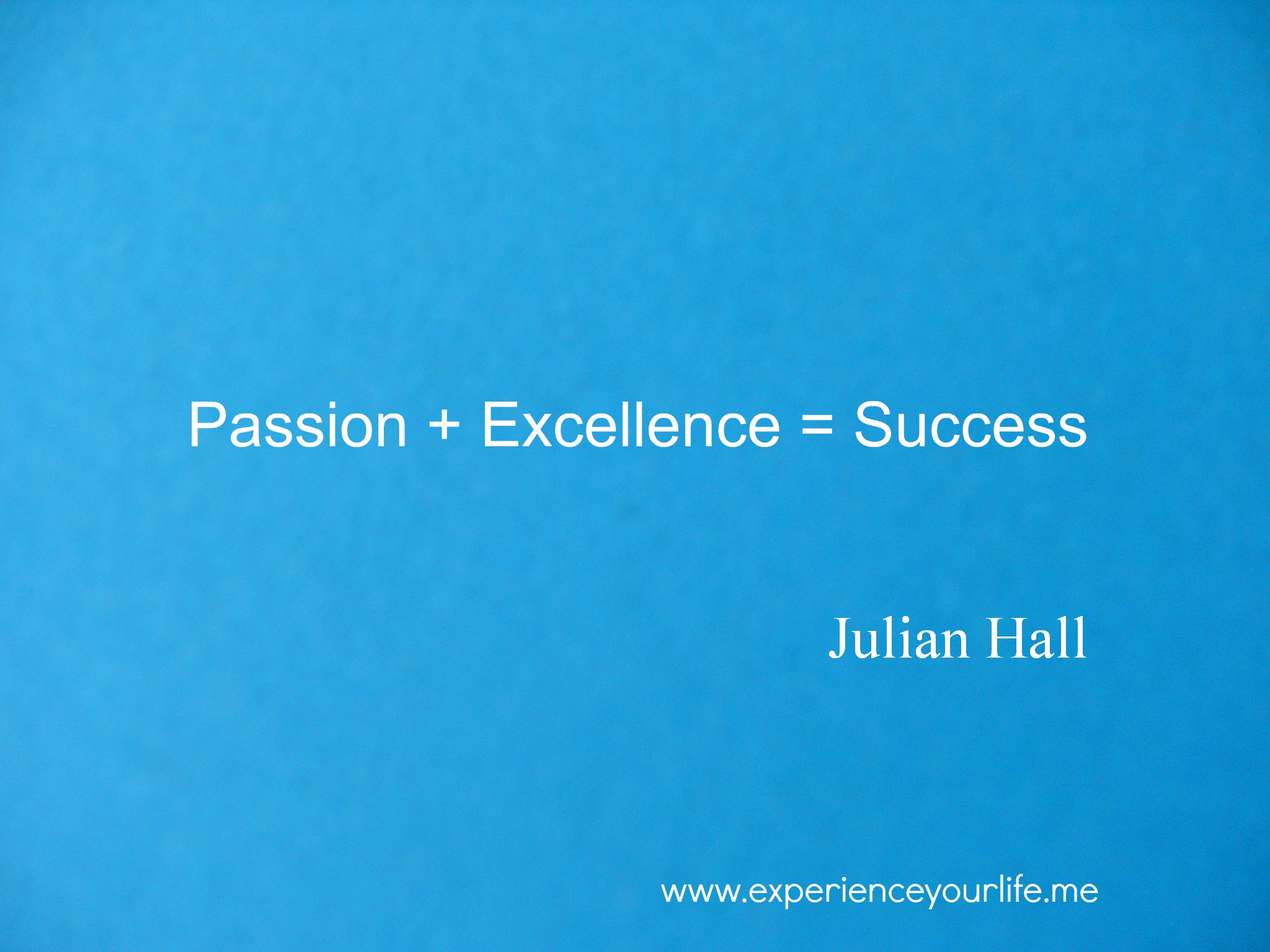
A Definition of Success Courtesy of Julian Hall

A Definition of Success Courtesy of Julian Hall

How is your week working out?  Hopefully you have successfully dealt with your Urgent and your Important tasks and you can turn your attention to some strategic planning.

As you think about your strategic leadership goals, what would you consider is your formula for success?  How helpful do you find Julian Hall’s equation shown above?  Have you got a unique approach to leadership which keeps producing results for your team?

Julian was just one of several great speakers I saw at the Business Show last week (he’s on Twitter @theultrapreneur and online here  Tweets from the Show are hashtagged as #TBS2014 ).

If you went to the Show I’d love to know what was your key take away from the various Speakers you listened to?  Which of the connections you made was the most significant and why?

Feel free to look at the further ideas relating to your leadership, work and life goals in the Archive section here, on Facebook and Google+ too.  Or if you are a Linkedin user you can visit View Roger Dennison’s profile
 

Goals 2014: 3 Questions To Help You Decide Where To Offer Your Acts Of Service

Your Connections Increase In Number When  You Volunteer

Your Connections Increase In Number When You Volunteer

Were you following my previous posts about the reasons you should have a volunteering goal and the benefits coming your way from volunteering?  If you missed the posts on Contributing to your Community click in the Archive for 30 March and the Morale post is located there dated 8 April.

Your Acts of Service

That wider conversation led to me making a contribution to a discussion with Forbes online magazine contributor and Twitter user @tomwatson  You can get a flavour of the back and forth via this tweet:

This goes to show once you start offering thoughts and sharing views you quickly encounter the major benefit of volunteering: being connected means you can offer acts of service to others.

How Can Dunbar’s Number Help You Serve Your Contacts?

Mind you, if you can only hold stable relationships with 150 people it makes sense that as many of those people as possible are folks to whom you can be of service.  So here’s 3 questions for you based on Dunbar’s Number (those 150 people):

  • Do you want to offer service to your 5 most significant contacts, or do you feel obligated to do this (it is more authentic if you want to take action)?
  • What common characteristics do your top 5 contacts share?
  • How does that information shape the acts of service you will offer them this week?

Good luck to you with your offer to serve others.  You can get more ideas by checking out – and Liking if you want – my posts on Facebook and Google+ too.  Or if you use LinkedIn you can View Roger Dennison’s profile

Goals 2014: Want To Know How Volunteering Helps You Improve Your Morale?

Would you say your communication skills were above average?  Do your emails have clarity and purpose?  How about your clients, do they always engage with your messages, taking the necessary action as a result?

If you answered ‘Yes’ research suggests you probably accomplish a lot in your work, by getting your message across effectively.  I believe you will also gain if you spend some time as a volunteer, using those skills to benefit your community.

By offering your existing skills to a project you inevitably highlight your learning needs; this can lead you to acquire new abilities, gain confidence and benefit others in the process.  Your morale increases when your skills are being put to good use (OECD data suggests in the UK people spend 2 minutes daily in volunteer activity, compared to 6 minutes in Australia and 8 minutes in the US.  That’s just a snapshot of the positive energy being generated globally through volunteer effort).

Using Skills Well Benefits You & Your Community

Using Skills Well Benefits You & Your Community

In the short term by volunteering you will be affecting and improving the lives of a range of clients, prompting them to take action and make a difference in their own, plus others’ lives.  From my experience in England Community First (#commfirst on Twitter) projects and panels benefit from volunteers, like you, who can communicate effectively.

There are plenty of other voluntary projects you could offer your communication (or other) skills to, depending on your location.  Your local voluntary action co-ordinating organisation should be able to signpost you to a list of outfits in need.

So, when will you take the first step to put your skills to use for others’ benefit?  Doing this helps you find renewed purpose and confidence, which can feed back into your work and make you a more valuable member of staff.

Want to find out more about goals you can explore, relating to your work and life?  Then visit the Archive section here, or take a look on Facebook and Google+ too.

Goals 2014: One Step You Can Take To Be A More Confident & Resilient Carer

Are you feeling the strain of being a carer for an elderly parent or relative?  If the answer is “Yes” and you are in the UK then chances are you are a woman, rather than a man.  The current caring statistics and facts from Carers UK indicate that of the 3 million people in the country caring for relatives, 58% are women.

What does caring save?

Carers save the economy £119 billion per year (an average of £18,473 per carer).  However, 1 in 5 of those people who act as carers, whilst also working, are forced to give up work altogether.  The reason for this: the significant demands of combining caring and work.

What does caring cost you, the carer?

Caring obviously takes its toll on the woman, or man, making the effort to support their relative.  It can be emotionally demanding to support an elderly parent.  The carer’s well-being can take a knock.  It can also place a strain on the network of other important relationships in your life.  The emotional journey can affect your confidence too.

What questions could you ask yourself to establish how you feel about being a carer?

What is your goal regarding combining caring responsibilities with your working life? Where does your support come from while you are bearing the stress of supporting someone else?  What is the impact on your wider life and relationships of being a carer?

How do the key issues impact other people’s lives?

This question was aired in a moving edition of BBC radio 4’s Woman’s Hour today.  There are seemingly as many answers as there are carers.  For some carers unresolved family conflicts can be exposed by one person shouldering the responsibility of looking after a parent.  For others caring is an act of love, reflecting life long closeness and affection.

If you are UK Based you can find the recent editions of Woman’s Hour on iPlayer by searching for Radio 4 programming here  You can follow the programme on Twitter @BBCWomansHour

The Woman’s Hour discussion reminded me of a tweet  late last year, concerning how to manage challenging family relationships.  Do follow the link to read into the topic.

What action will you take this week to improve your confidence & resilience as a carer?

Developing an ever more secure adult identity helps: you are entitled to seek help and effective support.

How would you feel about making one inspired change, following International Women’s Day, this Saturday?  Could you share more information about the impact of your caring duties with your employer, partner, and friends?  How much better could your situation become if these important people truly understood what you were experiencing and provide you with more effective support this year?

Good luck to you as you take action to help improve your capacity to care for others and yourself.

Feel free to check out my Archive section for more thoughts on well-being and pursuing life goals.  There are further ideas relating to these areas on Facebook and Google+ too

Goals 2014: 3 Questions To Help Your Personal Growth

Cup Of Tea

How Are You Planning To Develop This Spring?

Friday was Valentine’s Day, one of the few days in the year where your goal is simple to define: happiness.  How did it feel to take action to improve the quality of your personal relationship?

Congratulations on starting the ball rolling.  This weekend is the opportunity to take a 30 minute tea / coffee break and do some wider work on your goals.  When will you take further action to make your personal and professional life even better?

When you are doing this work – to help yourself develop in the direction you want to this spring – why not use the three questions below to kick start your thoughts.  Write down the answers and identify the action you are going to take.  Include the exact time in the coming week when you will take the action (and reward yourself when you do).

  • How will you seek more support from the people who will help you achieve your career and personal goals?
  • When will you influence your social network to provide you with more support?
  • As you take action on your own behalf what contribution will you make to the development of the people around you?

Good luck with your actions.  Feel free to feedback on your progress via the Contact page or on Twitter @RogerD_said (you can use On Facebook and Google+ too)

Goals 2014: Your Key To The Three Main Benefits Of Being Coached

Here, in case you missed it, is another chance to hear more about the three key benefits of being coached.

Feel free to share the information with family, colleagues and friends.  Get in touch when you are ready to arrange your own coaching programme and to start living your best life.