Goals 2014: 5 Questions For People Using Social Media To Connect With Others

Social Media Activity

Just Some Of The Ways To Be Active On Social Media

How many different channels do you use to pursue your social media goals and present your brand online to the world?  As I researched this post I realised just how many social media channels there are, and how little time there would be to make the best use of all of them.  That’s why I’m referring to just a handful of platforms.

US versus UK Social Media Statistics

US data from 2013 undertaken by the Pew Research Centre (a non-partisan ‘fact tank’) is relevant here.  They have broken down online activity to identify who is using social networking (73% of US adults are apparently) and where they spend time: Would you say your strategy is to form links with 16% on Google +, or the 22% of adults on Linkedin (which celebrates its 11th birthday on 5 May)?  Connect with the 18% of adults using Twitter?  Or do you relate more with the 71% of all adults using Facebook?

According to Ofcom in the UK 55% of adults owning mobile web enabled devices use them to visit social networking sites, or networking apps.  That’s a hefty segment of users who you could be reaching.  Assuming you can find the right channel to engage with the demographic you have

Google+ How Is It For You?

It is a timely question as JP Mangalindan, writing online for CNN Fortune and Money, has speculated about the platform’s future in a recent tech article   How productive a space is Google+ for you?

Site Statistics

We’ve all visited sites where the most recent post was six months ago.  Perhaps the site’s owner looked at their site statistics, felt it wasn’t getting enough traffic and abandoned it for that reason.  I wonder what signal that sends to visitors and to corporations like Google who created the site?

5 Questions For People Using Social Media To Connect With Others

So there is high take up with social media in general, although some platforms are more popular than others.  All of this  prompts me to ask the following:

  • What story do your posts tell about your brand (well established leader in your sector, or attention worthy new entrant)?
  • What timing strategy do you follow when you post to your social media sites (Weekly, or less often? Midweek, or weekend?)
  • How many new visitors are you adding by posting?
  • What do your visitors gain by looking at your site (insight from material you create; engagement with other peoples’ posts which you curate and repost; more information about your work)?
  • When visiting your site on mobile devices do people miss out on some of the desktop content (or could they browse and even buy in both places)?

Your answers to those questions can help you assess the return on the time you invest, in creating and curating social media posts.

Feel free to browse the other ideas relating to your work and life goals in the Archive section here, on Facebook and Google+ too.  Or if you are a Linkedin user you can View Roger Dennison’s profile and connect with me there.

Goals 2014: How Well Does Your Leadership Reflect Your Equality And Diversity Goals?

How Effective Is Your Leadership On Equality And Diversity?

How Effective Is Your Leadership On Equality And Diversity?

If you are like many leaders it is probably a challenge to get through your To Do list and deliver your everyday goals.  If you prioritise your medium and longer term goals too, this post may appeal to you.

What Effects Does Dominant Group Thinking Produce?

Here is a 58 minute video by anti-racist speaker Tim Wise, which is worth a look, if you have time and you have stretching leadership goals which are inspired by your equality and diversity values.  In case you haven’t time for the full video there are excerpts on Youtube which you can search for.

To my mind the key take away from the video is this: Being in the dominant group can leave you thinking you have the luxury of not having to care what other people think.  That attitude will make it harder to deliver on equality and diversity goals.

The upside of dominant-group thinking is simple: You face no obstacles to getting your goals accomplished.  You don’t experience anxiety.  You also don’t need to spend time on reflection about the impact of your words.  You can behave as you want to.  After all, you are acting on behalf of people like yourself, aren’t you?

How Do People From Diverse Backgrounds Respond To Dominant Group Thinking?

People from diverse backgrounds in your current or potential audience may take a different view.  On the least damaging end of the scale if you misspeak on a one-off basis you may not face any lasting consequences.  Get in wrong often enough and the authenticity of your brand values may be called into question.

What Are The Real World Consequences Of Sending Out The Wrong Equality And Diversity Messages?

In the US, major league basketball franchise owner Donald Sterling has experienced some major consequences following media coverage of comments he made about the sort of person he wanted courtside.  Being banned for life from the NBA and forced to sell his team, the LA Clippers for $850m, may influence him to rethink his approach to equality and diversity.

In the UK, BBC television Top Gear’s presenter Jeremy Clarkson is reportedly on his final warning from the corporation, after another controversial week.  Notwithstanding the 350 million viewers his programme receives globally he is having to rethink his approach to how he broadcasts.

Thee are high profile examples, but I think the basic principles are applicable to businesses generally.  Take a few moments to review your situation.  How well do you feel your organisation is doing on Equality And Diversity at the moment?

What Question Can An Authentic Leader Ask Of Themselves To Improve Their Equality And Diversity Focus?

Whether you are in the US, UK or further afield here’s a question that can ask yourself to improve your leadership:

  • What action will I take, this month, as an authentic leader to help my organisation make better use of its diverse workforce (or to demonstrate our commitment to equality goals)?

Feel free to continue this conversation about the relationship between authentic leadership, your values, and equality and diversity within your organisation.  Do let me know what impact your action has, when you start to see some results.

By all means take a look at the further ideas relating to your work and life goals in the Archive section here, on Facebook and Google+ too.  Or if you are a Linkedin user you can View Roger Dennison’s profile and connect with me there.

Goals 2014: What is the 1 step you will take to be happier this Spring?

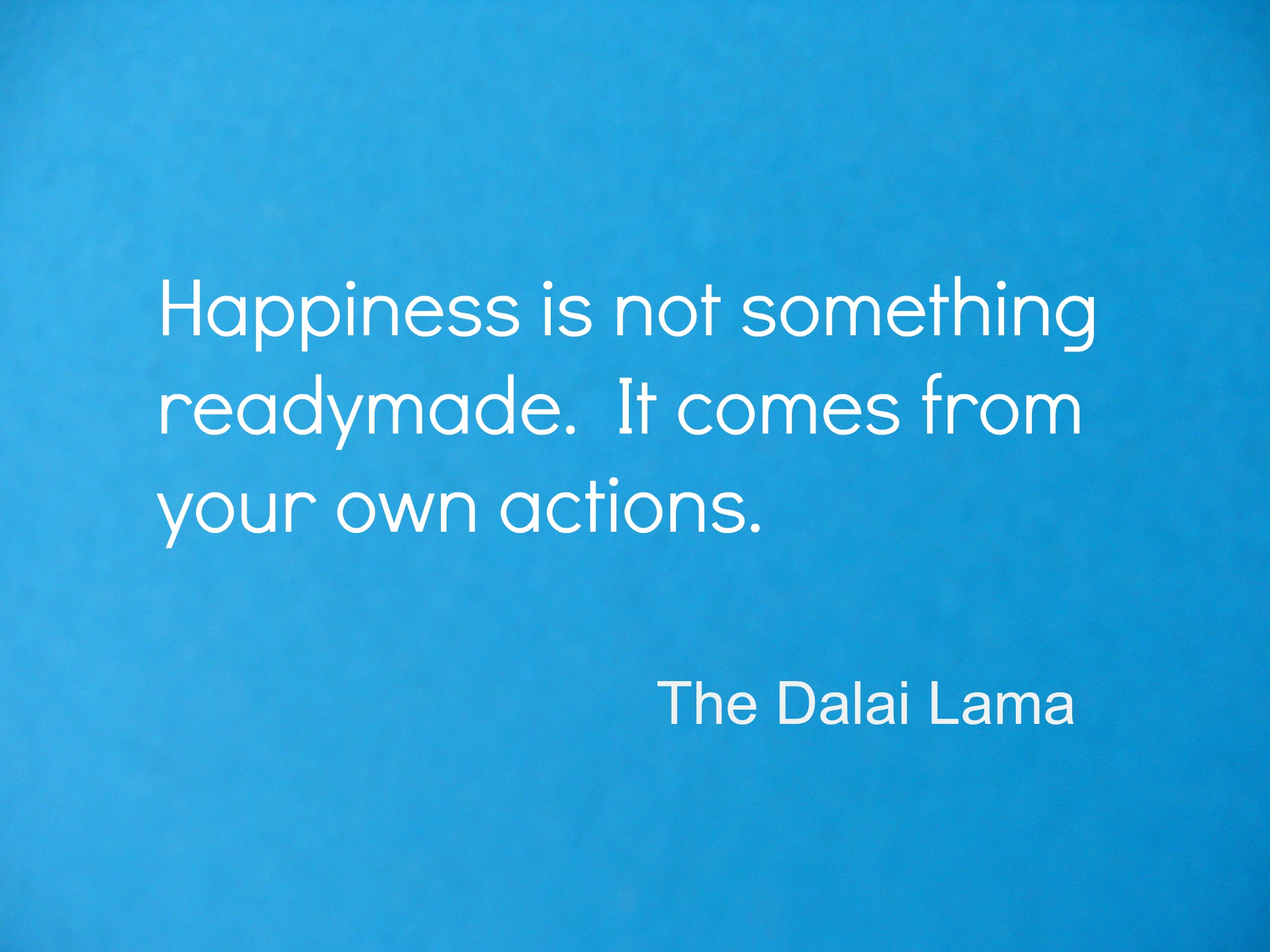
Dalai Lama quote on Happiness

Happiness Is Linked To Taking Action

How was your working week?  Stressy?  Unfulfilling?  Seemingly Goaless?  Don’t worry if any of those responses ring bells with you.  According to Gallup’s 2012 State of the Global Workplace research only 13% of employees are engaged by their work. That suggests the bulk of workers around the world are unhappy with their employment, to some extent.  There is action you can take to change your situation.

About a week ago I spent a day out with friends in the 30 and 40 something age range.  This social time included setting the world to rights over a meal.  Enjoying a relaxed, supportive afternoon with people who are socially engaged set me thinking.  I reckon it doesn’t take very much action to become more connected to good people and therefore a little happier.

Research about actions you can take to become happier

It turns out that research conducted by Colby College Professor Christopher Soto, discussed in the Wall Street Journal by Elizabeth Bernstein shows that as we age we become more agreeable and better connected.

Apparently there are 5 psychological domains* which help shape about half of our personality (the other half comes from our biological make up, although Dr Dean Ornish suggests in a TED Talk that your genes are not your fate).

5 Personality Domains Discussed Professor Soto’s research

We can choose an area from the following domains and set an improvement goal for ourselves within that area (I’ve worked on goals in the final domain for instance, so I can confirm that spending time with your friends, works wonders).

Conscientiousness

Agreeableness

Openness

Extraversion

Neuroticism

Your 1 Question Leading To Happiness

Here’s your 1 question:  which of these domains will you dip into during the next few days to identify your spring happiness goal?  That is your first step toward selecting the most obvious action to take, to move you toward the life you deserve at work and beyond the 9 to 5.

More About A Happy State

If you want a quick pick-me-up before diving deep into goal setting you can always clap along with Pharrell Williams whose song ‘Happy’ puts a smile on my face.  To learn more about the connection that song has made with people across the United States and around the globe try this short excerpt from an interview Oprah conducted with Mr Williams recently.

There are further ideas relating to your work and life goals in the Archive section here, on Facebook and Google+ too.  Or you can View Roger Dennison’s profile


Goals 2014: How Will You Connect And Contribute To Your Network This Week?

Do you have a goal to connect effectively to the people in your organisation, sector, or wider community? What sort of contribution do you want to make to the people in your networks anyway?

Dunbar’s Number

Did you know research by networking advocates Editorial Intelligence suggests that you can only hold stable relationships with 150 people (a figure known as Dunbar’s number)?  If communication is part of your goal setting agenda you are under no pressure to make your connections count!

Contacts You Connect With & Contribute To

How Many Contacts Do You Connect With & Contribute To?

Engaging People

Seriously though, these are timely questions. Organisations are setting their goals for the new financial year. Their staff are creating their strategies for personal improvement.

The UK Civil Service even has Engaging People as one of its key values (although it still has some work to do, to improve the feedback process on the blog published by its Head Sir Bob Kerslake ).

Organisational psychologist Professor Cary L Cooper outlines in a blogpost for the Chartered Institute for Personnel and Development that our networks not only help us to thrive, they help us to cope. He says networking is a key determinant of success.

John P Morgan is another advocate of inter-connectedness and service. You can find out more about his view here on youtube : his perspective is applicable in the UK, US, the UAE or anywhere else people act collaboratively.

Your Actions

So, now you have a different perspective of the role of contributing to others here’s a question for you to answer (making an appointment with yourself to see it through):

What one action are you going to take, this week, to make an authentic contribution to your network?

There are further ideas relating to your work and life goals in the Archive section, and on Facebook and Google+ too.

View Roger Dennison's LinkedIn profileView Roger Dennison’s profile

Goals 2014: 3 Questions To Help You Advertise A Vacancy Or Select Your Next Job

Is searching for a new job on your Spring To Do list?  Perhaps you are a recruiter whose goal is to fill your post with the ideal recruit.  Neither goal is easy, is it?

Cufflinks For Work

What Are The Essentials For Your Job?

As an applicant you have your check list of what you want (which might include a role that is a good match to your skills; the right salary; a workplace culture you like; a happy work -life balance).

Meanwhile the advertisers are picturing their ideal candidate, someone with the Essential Qualities for the vacancy. They might have in mind someone: aggressive about getting results; assertive without being cocky; independent yet a team player, where necessary.

Here’s the thing. The language used in adverts themselves may be off putting to some potential applicants.  Why?  Time magazine’s online edition shared some German research this week, suggesting that women do not apply for male sounding jobs.

Some terms, like ‘aggressive… assertive… independent’ could be sending unattractive signals out about the vacancy.  They could also be saying something unintended about the organisational culture too.  As the global economy starts to recover from the shock of 2008 there is strong competition to secure the right talent.  Getting it right promotes business growth.  Letting applicants know you are a good organisation to work for is a quick win.

Unappealing language is easily fixed, if advertisers take a few minutes to think about the most appealing / inclusive wording they could use, before signing off their recruitment text and posting their vacancies.  That simple adjustment might broaden their reach and result in a better hiring decision at the end of the recruitment process.

As you are thinking about the psychology of changing your job here are 3 questions for you to respond to.  They are ideal whether you are seeking a job, or advertising one:

  • What language in the advertisement attracts your interest / best represents your vacancy?
  • How many of the Essentials Qualities do you have to offer / do you really want candidates to have?
  • How will this job help you achieve your personal goals once you get it / how will filling this vacancy help your organisation’s goals?

Good luck taking action which moves closer to your recruitment goal.  Feel free to nose around the Archives here and look at ideas I refer to relating to your work and life goals on Facebook and Google+ too

Goals 2014: Here’s 1 Action To Help You Improve Your Personal Presentation

Here are some questions for you to reflect on over the weekend.  How much effort do you put into the visual side of your personal brand?  Could your choice of work wear represent who you are more effectively?  What action will you take to improve your personal presentation this Spring?

What Does Leadership Look Like?

What Does Leadership Look Like?

Not too sure how to answer? No worries.  Here is a short video you can watch now as part of your personal improvement goal.  It was filmed at Ad Week Europe and in 4 minutes Gok Wan, Kathleen Saxton, and the Guardian’s John Plunkett outline some useful key presentation concepts.  Could this be another theme for you and your coach to explore when you discuss your goals and your values?

Feel free to look at the further ideas relating to your work and life goals in the Archive section on Facebook and Google+ too

Goals 2014: What Are 5 Advantages You Gain By Volunteering?

Feel Good Volunteering

Feel Good Volunteering

What’s your immediate response to the concept of ‘volunteering’ some of your time?

“I can’t see the point. Besides I don’t have the right skills.”

“Not one of my goals, I’m afraid. I’m too busy in the real world.”

“I plan on doing some volunteering when I retire.”

Although I have heard similar sentiments before I think they might be keeping people from doing themselves and their workplaces a big favour.  For instance thousands of Community First Panel Members and Project People are currently benefiting their neighbourhoods, and themselves, by their efforts.

What’s In It For You?

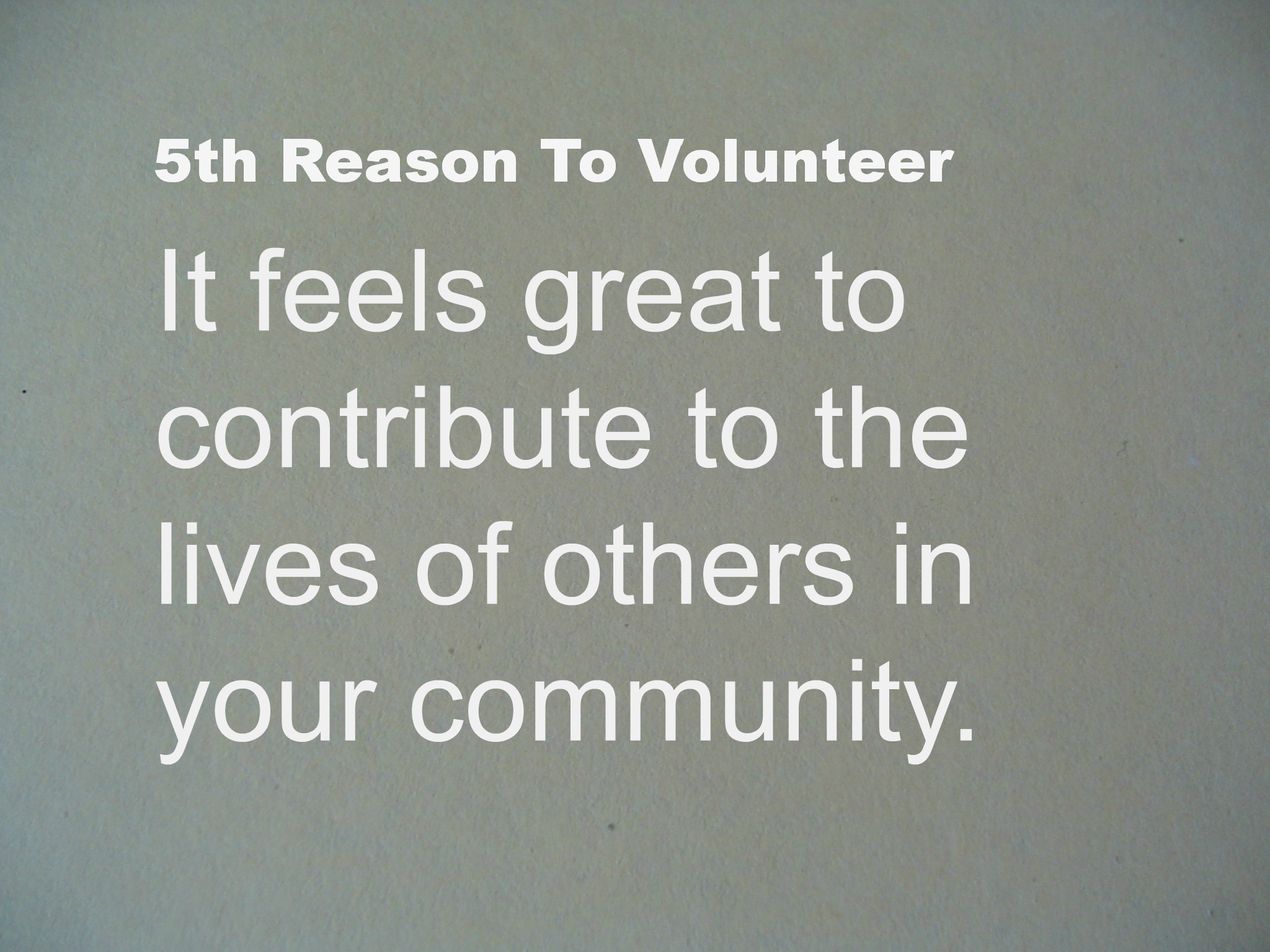
So, building a volunteering goal into your personal development plan for 2014 adds value to your life, as well as the world around you. Here are 5 advantages that you and your day job gain when you take volunteer action:

5. You get to influence the development of your community and watch it change as a result of your work. Community might mean the workplace around you, the neighbourhood in which you live, or the wider networks to which you contribute.

4. Your leadership is instrumental in making change happen. When you volunteer you are doing more than your day to day activity. Contributing to an exceptional project means you are making an appreciable difference to others’ lives.

3. By working effectively with others your portfolio of skills grows.  You pick up aspects of what others can do. Meanwhile they are learning from you.

2. Your volunteer status distinguishes you as an activist, someone who sees things as they might be rather than just as they are.

1. Volunteering connects you to the widest network of active, helpful people. Who knows when those connections will be useful to you.

What’s Your Next Step?

Those are just some of the positives that come your way by stepping forward to volunteer. Over to you now: what project will you devote some time to this Spring?  Feel free to visit the Archives for some inspiration.

Background

As a footnote, according to recent data on Community from the Office for Economic Co-operation and Development (OECD) on average, people in United Kingdom spend 2 minutes per day in volunteering activities, lower than the OECD average of 4 minutes per day.

By contrast on average, people in United States spend 8 minutes per day in volunteering activities, one of the highest in the OECD where the average is 4 minutes per day. high scores suggest there is a strong sense of community in the United States.


Goals 2014: 2 Life Planning Questions For People Over 45

Were you between 15 years old and your mid 20s in 1975?  If you were around that age in the UK you might remember your first trip to your local – newly opened – McDonalds franchise.  You might have seen the newly released Steven Spielberg film ‘Jaws’ earlier in the year  too.  The impact of the UK economy’s 24% annual inflation rate was pretty new too; so was the trend of nearly a million people out of work.

There is quite a contrast between the UK in the mid 1970s and the country nearly 40 years later.  As this week’s Budget will reveal the economy is showing signs of resurgence after the financial crisis of 2008, which triggered a global recession.  The question is what does that change in the economy mean for your personal circumstances?

How does your age affect your life plan?

Have you reached your mid 60s with the degree of financial security you planned for?  Based on current life expectancy  projections, for British 65 year olds, will you be comfortably off for your final 21 years (if you are a woman) and 18.5 years (if you are a man)?  Put another way, how comfortable are you with the gap between what you expected from your working life and what you have got?

I’m asking as unexpected insecurity has come up as an issue with previous coaching clients.  Those in their 40s are thinking ahead, to put a strategy in place to make their future more secure.  Those in their 50s are taking action to make their next decade more satisfying.

It is unsettling to pursue one career track, or follow a portfolio career, and not arrive at the destination you had planned for.

How has the global recession affected someone in their 60s (and what lessons are there for those in their 40s and 50s?) 

Follow the link in the Tweet below to learn more about actions to help secure your future.  Then give yourself a score for your answers to the two bullet point questions that follow the Tweet (10 out of 10 means you are totally satisfied with your situation, zero means you are totally dissatisfied, 5 means you are neither satisfied nor dissatisfied)

  • How satisfied are you with the way you curate your presence across your online profiles?
  • How content are you with your approach to sharing useful information and contributing to the development of your online connections?

Total up your score adding both answers together.  If your total score is 11, or less, what steps will you take this month to improve the way you present yourself online?  How does your self-marketing strategy fit into your wider financial security goals?

What are your other self-development goals this spring?  Why not dip into the Archives at www.experienceyourlife.me for some inspiration.  There are more ideas On Facebook and Google+ too

Goals 2014: 3 Questions To Help Manage Community First Panel Legacies

Community First Money

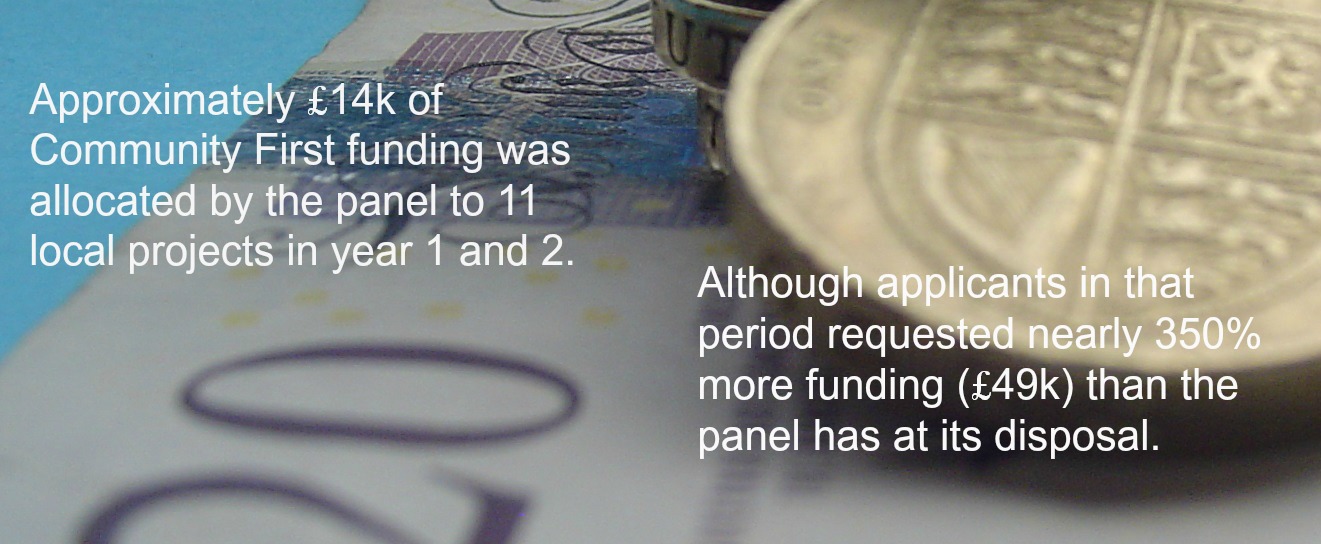
What Community First Funding Meant To One Ward In Year 1 And 2

Are you familiar with the concept of a Community First panel? 

If the answer is, ‘No’, here’s a brief explanation from my perspective, as a former panel chair.

‘Community First’ is the government’s neighbourhood improvement programme, running in England between 2012 and 2015.  The programme’s goal is to make funding available via a residents’ panel to not-for-profit organisations.  Those organisations will improve the quality of life in disadvantaged wards.

I think this approach could actually form the blue print for a future government wanting to devolve additional voluntary funding down to local communities via resident led panels.  That will depend on the panels functioning effectively, like the best project teams do.  The panels will still require thoughtful leadership and the input of skilled and confident volunteers.  Their legacy will involve changing the face of their neighbourhood.  A little work is necessary now to help make that legacy possible.

What are the panels doing at the moment?

As I write this post, residents‘ panels are deciding which local projects should receive a share of the final year of funding starting from April 2014.  The clock is ticking though, as panels need to submit their decisions to the government’s key delivery partner (the Community Development Foundation or CDF) by the end of March.

Local panels are a key part of the community based process, while other bodies have an overview of the bigger picture:  CDF is one of those bodies; Ipsos Mori the market research company is too, having evaluated the programme’s outcomes last year; the Young Foundation  is also an external partner supporting panels’ learning processes.

Which questions can the panel answer to help produce better future results?

Any project can benefit from holding a lessons learned exercise.  This exercise can provide valuable information to be used the next time similar work is commissioned.  I think the Young Foundation should encourage the panels to hold such an exercise and provide the answers to three questions this year.  This action forms a key part of the process of securing Community First’s panel legacy:

  • Which of the panel’s skills produced the bulk of the panel’s results?
  • What skills did the panel lack?
  • How could the panel produce even better results for their community if funding was available after 2015?

Answers to those questions should build up a picture of how panels produced good quality timely results, in a tough financial climate, and with limited volunteer resources.  Knowledge or skills gaps can then be filled by coaching or by mentoring.  Mapping that legacy now will also be invaluable if better results are expected from similar panels, by a future government.

Where can I find more information?

You can see some tweets about the programme from CDF, panels, and funded projects on Twitter if you use he #commfirst hashtag.

Click on the Podcasts tab above to listen to some questions you can answer to help you lead a panel (or a voluntary project) more easily.

Feel free to check out the Archive section for more thoughts on work and life goals.  There are further ideas relating to your work and life goals on Facebook and Google+ too

Goals 2014: One Step You Can Take To Be A More Confident & Resilient Carer

Are you feeling the strain of being a carer for an elderly parent or relative?  If the answer is “Yes” and you are in the UK then chances are you are a woman, rather than a man.  The current caring statistics and facts from Carers UK indicate that of the 3 million people in the country caring for relatives, 58% are women.

What does caring save?

Carers save the economy £119 billion per year (an average of £18,473 per carer).  However, 1 in 5 of those people who act as carers, whilst also working, are forced to give up work altogether.  The reason for this: the significant demands of combining caring and work.

What does caring cost you, the carer?

Caring obviously takes its toll on the woman, or man, making the effort to support their relative.  It can be emotionally demanding to support an elderly parent.  The carer’s well-being can take a knock.  It can also place a strain on the network of other important relationships in your life.  The emotional journey can affect your confidence too.

What questions could you ask yourself to establish how you feel about being a carer?

What is your goal regarding combining caring responsibilities with your working life? Where does your support come from while you are bearing the stress of supporting someone else?  What is the impact on your wider life and relationships of being a carer?

How do the key issues impact other people’s lives?

This question was aired in a moving edition of BBC radio 4’s Woman’s Hour today.  There are seemingly as many answers as there are carers.  For some carers unresolved family conflicts can be exposed by one person shouldering the responsibility of looking after a parent.  For others caring is an act of love, reflecting life long closeness and affection.

If you are UK Based you can find the recent editions of Woman’s Hour on iPlayer by searching for Radio 4 programming here  You can follow the programme on Twitter @BBCWomansHour

The Woman’s Hour discussion reminded me of a tweet  late last year, concerning how to manage challenging family relationships.  Do follow the link to read into the topic.

What action will you take this week to improve your confidence & resilience as a carer?

Developing an ever more secure adult identity helps: you are entitled to seek help and effective support.

How would you feel about making one inspired change, following International Women’s Day, this Saturday?  Could you share more information about the impact of your caring duties with your employer, partner, and friends?  How much better could your situation become if these important people truly understood what you were experiencing and provide you with more effective support this year?

Good luck to you as you take action to help improve your capacity to care for others and yourself.

Feel free to check out my Archive section for more thoughts on well-being and pursuing life goals.  There are further ideas relating to these areas on Facebook and Google+ too